Small group reading is one of the most powerful ways to help students grow as readers. It gives us the opportunity to meet students where they are, target specific skill gaps, and provide personalized instruction that simply isn’t possible during whole-group lessons.
The challenge? Finding enough meaningful activities to keep students engaged while addressing a variety of reading needs can feel overwhelming.
If you’ve ever felt like you’re constantly scrambling for materials or trying to reinvent your reading groups every week, you’re not alone. Here are a few simple ways to make your small group reading instruction more effective and manageable.
1. Focus on One Skill at a Time
One of the biggest mistakes teachers make during small group instruction is trying to cover too much at once.
Instead of squeezing phonics, fluency, vocabulary, and comprehension into every lesson, identify the skill that will make the biggest impact for that particular group.
Ask yourself:
- Are students struggling to decode words?
- Do they need fluency practice?
- Is comprehension breaking down after they read?
- Do they need stronger vocabulary support?
When you narrow your focus, instruction becomes more targeted and students make faster progress.
2. Use Data to Drive Grouping Decisions
Small groups should be flexible, not permanent.
As students grow, their needs change. Regularly review assessment data, running records, fluency checks, and classroom observations to make sure students are working in groups that match their current skill levels.
Flexible grouping allows you to provide intervention where it’s needed most while also challenging students who are ready for the next step.
3. Incorporate Hands-On Activities
Young learners thrive when they can interact with their learning.
Adding games, sorting activities, word-building tasks, reading response activities, and movement-based practice can help students stay engaged while reinforcing important reading skills.
Hands-on small group reading activities are especially helpful for struggling readers who may need additional opportunities to practice skills in different ways.
4. Build Consistent Routines
When students know what to expect, small group time runs much more smoothly.
Create predictable routines for:
- Warm-up activities
- Skill instruction
- Guided practice
- Independent application
- Review and reflection
Consistent routines reduce transition time and allow you to spend more time teaching.
5. Differentiate Whenever Possible
Not every student needs the same lesson.
Some students may need additional phonics support, while others are ready for higher-level comprehension work. Having a variety of activities available makes it easier to provide instruction that matches student needs without creating completely separate lesson plans for every group.
A Reading Resource That Simplifies Small Group Instruction
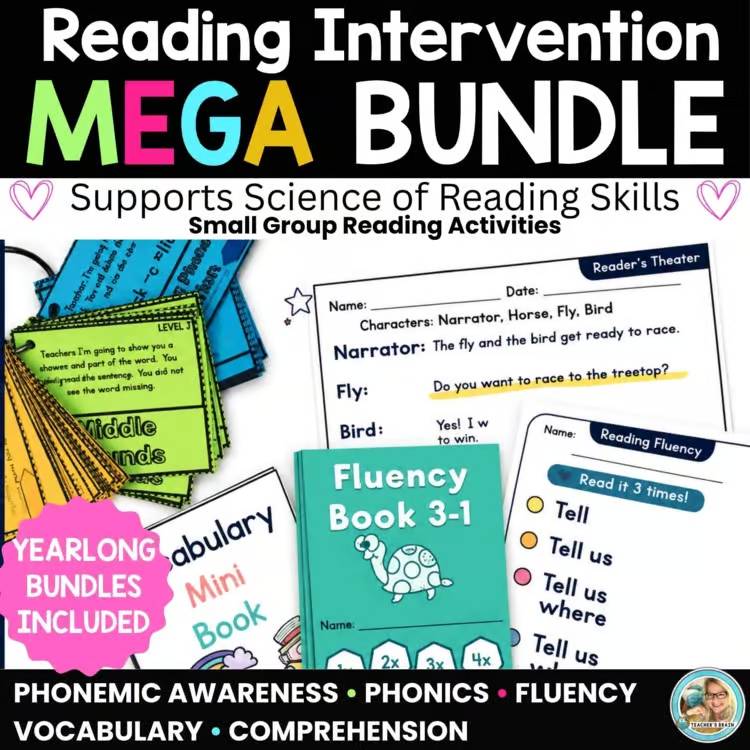
If you’re looking for a resource that helps organize your reading groups while providing activities for multiple reading skills, the Small Group Reading Activities Bundle is a fantastic option.
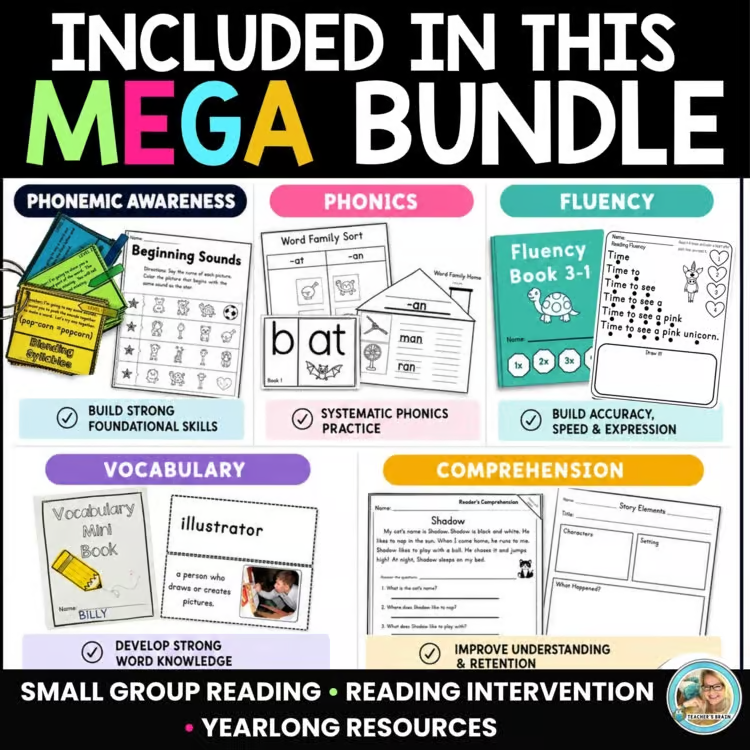
This comprehensive bundle was designed to support:
- Phonics and decoding
- Reading fluency
- Vocabulary development
- Reading comprehension
- Reading response activities
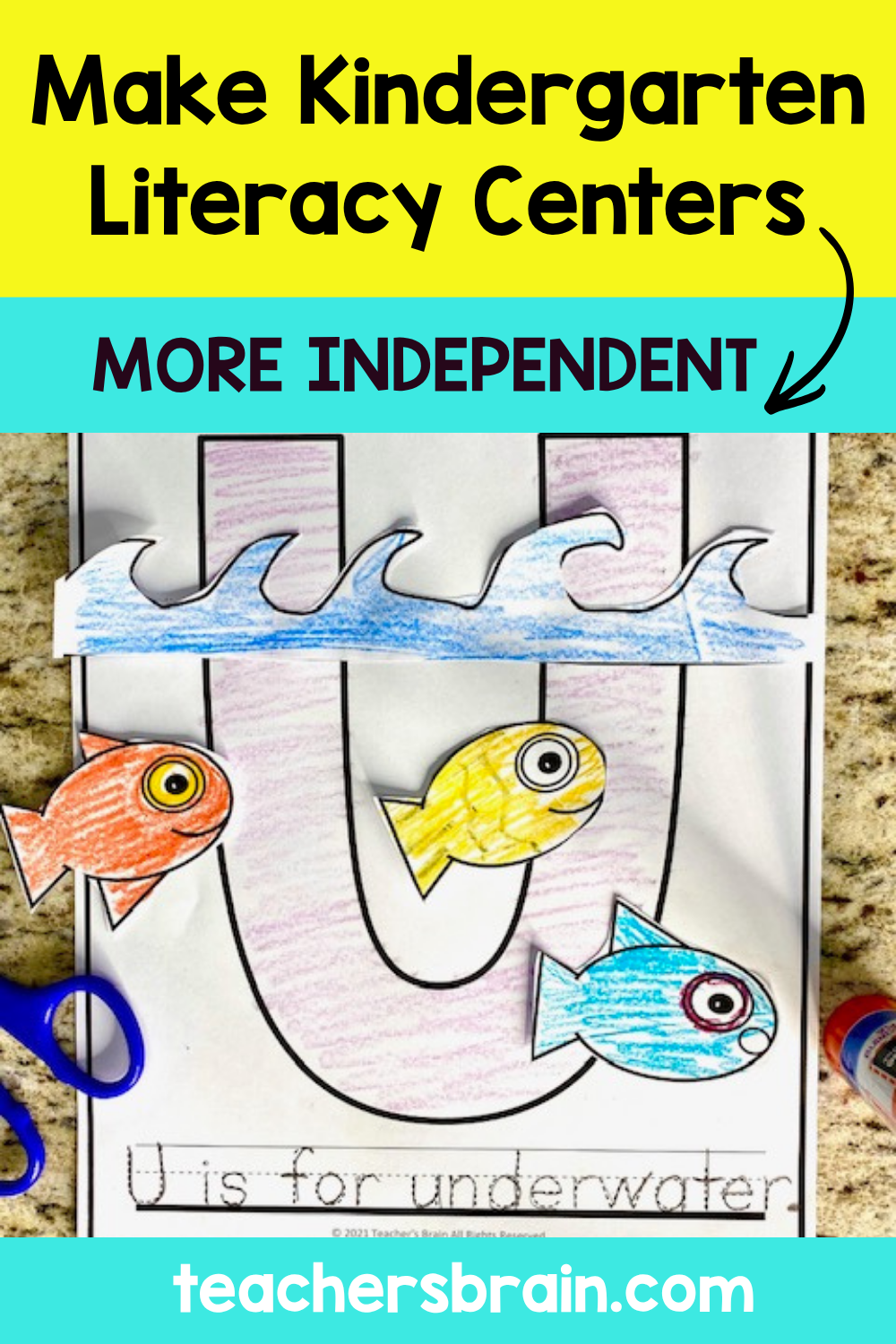
- Literacy centers
- Intervention support
- Differentiated instruction
What makes this bundle especially helpful is its flexibility. The activities can be used during guided reading groups, literacy centers, RTI, intervention blocks, independent practice, homework, or even whole-group instruction.
You’ll love having a collection of resources they can pull from based on exactly what students need rather than forcing every group through the same lesson sequence.
The bundle is ideal for Kindergarten and 1st Grade classrooms, but it also works wonderfully as an intervention resource for struggling readers in 2nd and 3rd grade who need additional support with foundational reading skills.
Save Time While Supporting Student Growth
Small group reading doesn’t have to mean spending hours creating materials every week. When you have a collection of targeted, engaging activities ready to go, you can focus your energy where it matters most…teaching.
Whether you’re working on phonics, fluency, vocabulary, or comprehension, having flexible resources available makes it easier to meet students where they are and help them become confident, successful readers.
The right tools won’t replace great instruction, but they can certainly make planning easier and small group time more effective for both teachers and students.
Looking for more reading tips? Check out my post here for tips on improving fluency!