One of the biggest challenges with early writing isn’t ideas… it’s independence! Many students want to write, but they’re unsure where to start, how to build a sentence, or whether they’re “doing it right.” That hesitation often leads to lots of hands raised, unfinished work, or students shutting down before they really begin.
Over the years, I’ve found that independence grows when students feel supported before they ever pick up a pencil. Here are a few simple, classroom-tested ways to help early writers become more confident and independent during writing time.
1. Give Students a Clear Starting Point
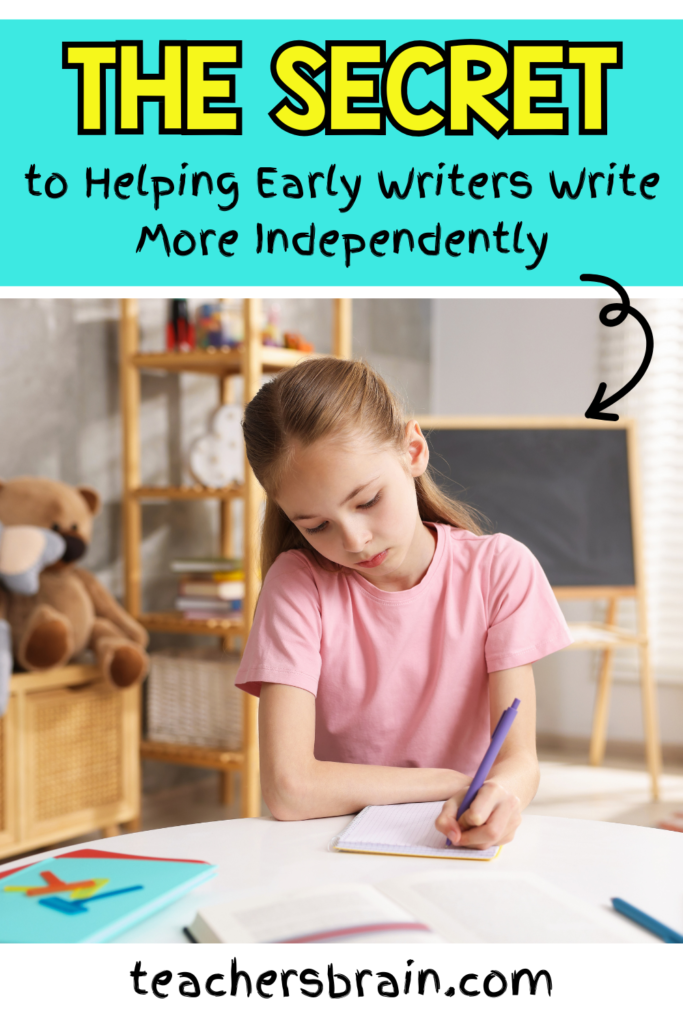
Blank pages can feel overwhelming for young learners. Providing a clear focus, like a picture, prompt, or structure, helps students know exactly what they’re supposed to do. When students don’t have to guess where to begin, they’re much more likely to work independently and stay engaged.
2. Talk It Out Before Writing
Before students write, let them talk. Partner talk, whole-group modeling, or even whispering a sentence to themselves helps students organize their thoughts. When students can say the sentence out loud first, writing it down feels far less intimidating.
3. Break Writing Into Small, Manageable Steps
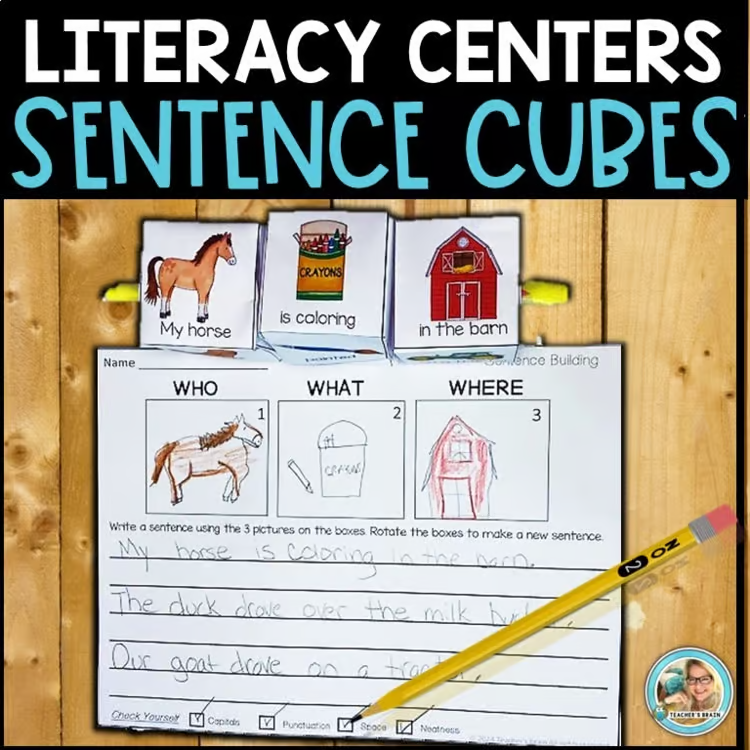
Instead of asking students to “write a sentence,” try breaking it down into steps: identify who the sentence is about, what is happening, and where it takes place. This structure helps students focus on one piece at a time, which builds confidence and reduces frustration.
4. Use Hands-On Sentence Building Activities
One of the easiest ways to support independence is to let students build sentences before they write them. Picture-based sentence building activities allow students to manipulate ideas, see sentence structure, and make choices without needing constant teacher support.
The Sentence Building with Pictures Themed Bundle is a great example of this in action. Students choose picture cards and build sentences using a clear who-what-where structure, then transfer those sentences onto provided writing paper. Because the routine is consistent and visually supported, students quickly learn how to work independently during writing centers, morning work, or small groups.
5. Celebrate Effort, Not Just Perfection
Independent writers grow when they feel safe taking risks. Encourage students by celebrating complete thoughts, effort, and improvement, even if spelling or punctuation isn’t perfect yet. Confidence is often the missing piece that helps students keep writing on their own.
A Quick Teacher Tip
Once students are familiar with your sentence building routine, keep the structure the same and change the theme. This allows students to focus on writing instead of directions and helps independence grow naturally over time.
Helping early writers work independently doesn’t require complicated lessons or extra prep! With clear structure, visual support, and hands-on practice, students can build confidence and develop strong writing habits that carry over into all areas of literacy.
Looking for more writing practice tips? Check out these winter writing prompts. ❄️