Looking for a way to bring science, reading, and hands-on learning together in a way your students will actually care about?
Let’s talk about space.
More specifically… the Artemis II mission 🚀
Space units are always a hit, but they can also feel overwhelming to plan. You want something engaging, meaningful, and aligned with your standards—but not something that takes hours to prep.
The good news? You can turn your classroom into a mini NASA training center with just a few simple activities.
Why Teach the Artemis II Mission?
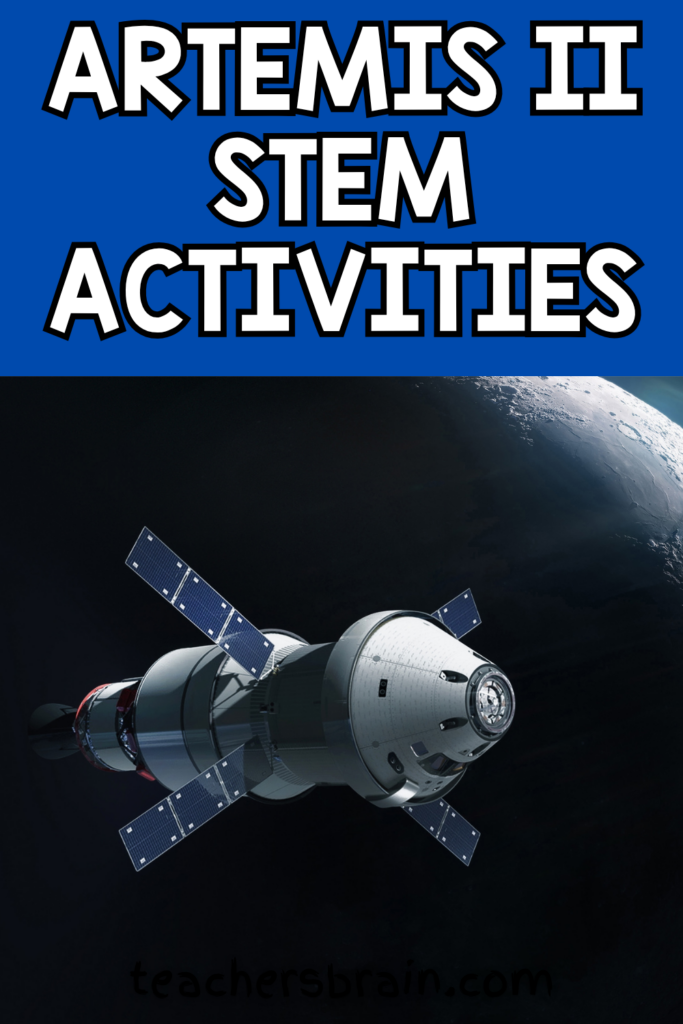
The NASA Artemis II mission is part of a real-world effort to send astronauts back to the Moon. That alone makes it incredibly engaging for students, they’re learning about something happening right now, not just history.
When you bring current events into your classroom:
- Students are more curious and invested
- Lessons feel more meaningful
- You naturally integrate science, reading, and writing
Plus, space topics are perfect for building critical thinking and problem-solving skills through STEM.
5 Easy Ways to Bring Artemis II Into Your Classroom
You don’t need a complicated unit to make this work. Here are simple, effective ways to incorporate it into your day:
1. Start with a Reading Hook
Begin with an engaging reading passage about the Artemis II mission.
Students can learn about:
- The purpose of the mission
- The astronauts involved
- How spacecraft like Orion work
Adding comprehension questions helps reinforce key skills while building background knowledge at the same time.
2. Add a Hands-On STEM Challenge
This is where the magic happens.
Try a simple rocket-building activity where students design and test their own rockets. Activities like this help students explore real concepts like force and motion in a way that actually sticks.
Hands-on challenges are especially powerful because they:
- Encourage problem-solving
- Promote teamwork
- Make abstract science concepts concrete
Many Artemis-inspired lessons include STEM challenges like rocket design or testing variables such as launch angle and distance.
3. Integrate Writing Without the Groans
Space topics make writing feel less like a chore.
Try:
- Mission reflection journals
- “If I were an astronaut…” prompts
- Short research responses
When students are excited about the topic, writing becomes much easier to manage.
4. Use Vocabulary in Context
Instead of isolated word lists, introduce vocabulary through the mission itself.
Words like:
- Orbit
- Spacecraft
- Launch
- Crew
Students naturally understand and remember these terms when they see them in action during lessons.
5. Incorporate Creative Projects
Creative projects are a great way to wrap up your Artemis II lessons and let students show what they’ve learned in a meaningful way. Whether it’s a simple space-themed craft, designing a mission poster, or building a model of their own spacecraft, these activities give students a chance to apply their knowledge in a hands-on, memorable format. They also encourage creativity and ownership, which helps the learning stick long after the lesson is over.
A Done-for-You Option That Saves You Time
If you love the idea of teaching the Artemis II mission but don’t want to piece everything together yourself, this is where having a ready-to-go resource makes a huge difference.
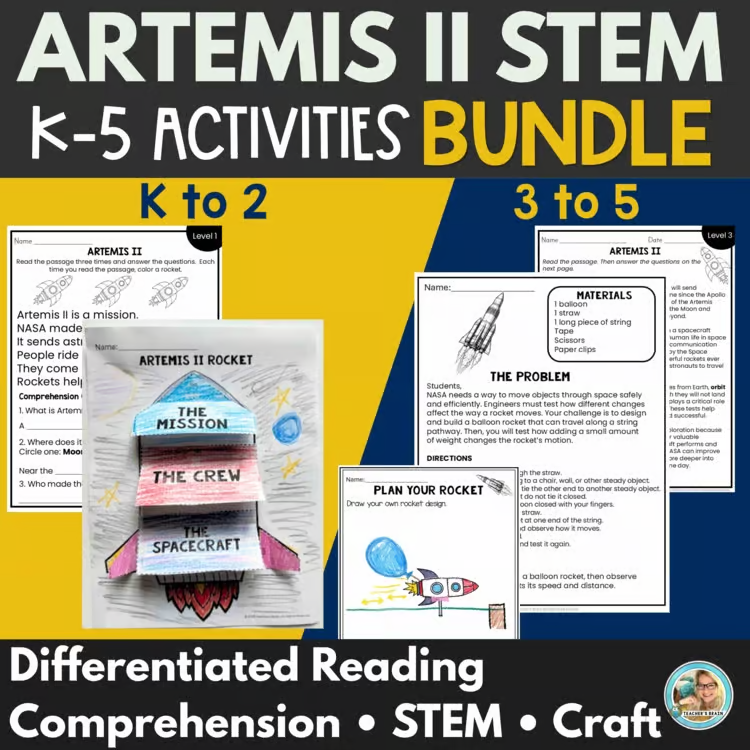
The Artemis II Mission STEM Activities Bundle (K–5) includes everything you need to make this unit both engaging and manageable:
- Reading passages with comprehension questions
- A rocket STEM challenge
- Writing and reflection activities
- Vocabulary support
- Posters and crafts
It even includes both K–2 and 3–5 versions, so you can easily differentiate for your students.
Whether you’re planning a full space unit, need a quick STEM activity, or want meaningful sub plans, this resource makes it simple to bring real-world learning into your classroom.
Bringing It All Together
Teaching the Artemis II mission doesn’t have to be complicated or time-consuming! With a simple combination of reading, hands-on STEM activities, writing, and creative projects, you can build a lesson that feels exciting, meaningful, and easy to manage.
When students are engaged in real-world topics like space exploration, they’re more likely to stay curious, participate actively, and retain what they’ve learned. And honestly, those are the kinds of lessons that make your day feel a little easier, and a lot more fun!
Looking for more STEM activities? Check out my post here.