Reading fluency isn’t a “nice-to-have” skill, it’s a bridge between decoding individual words and truly understanding text. In early grades, fluency means students can read with accuracy, proper pacing, and expression, not just word by word. When students are fluent readers, they use less mental energy on decoding and more on comprehension, confidence, and enjoyment.
Think of fluency like a car engine: if the gears (words) shift smoothly and quickly, the ride (comprehension) is seamless.
So how can teachers intentionally grow fluent readers from kindergarten through first grade? Let’s break it down.
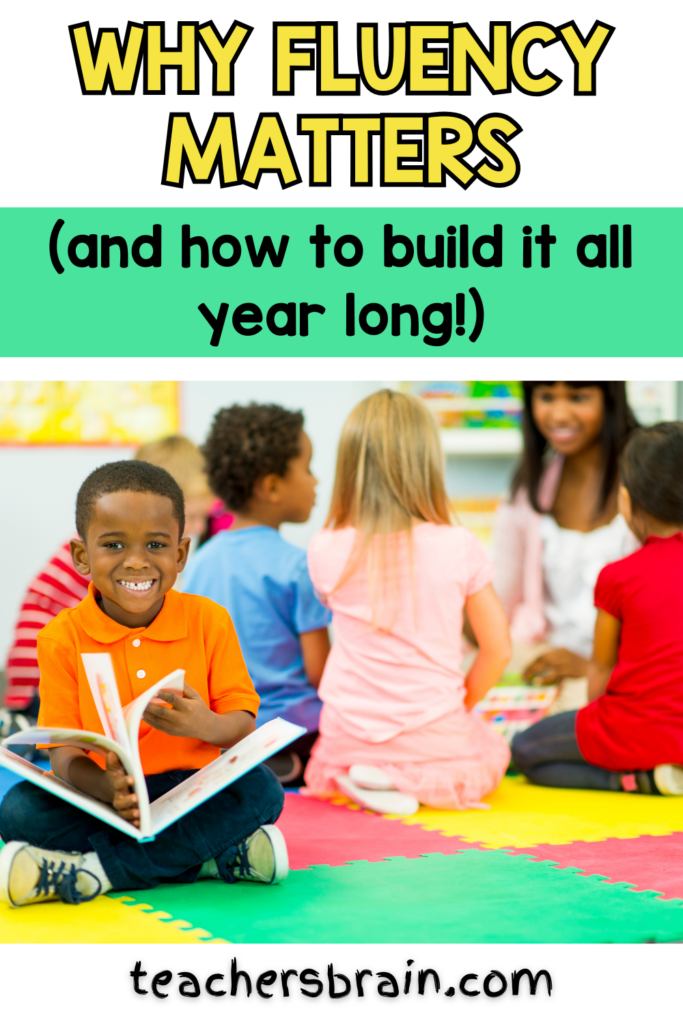
What Fluency Looks Like in Your Classroom
A fluent reader:
- Reads accurately with few miscues
- Reads at an appropriate rate
- Uses expression and phrasing that sounds natural
- Understands what they read, not just pronouncing words on a page
This is more than speed. True fluency connects reading to comprehension, and that’s where practice with purpose makes all the difference.
The Power of Repeated, Meaningful Reading
Research consistently shows that one of the most effective ways to build fluency is by giving students opportunities to read the same text several times, ideally with feedback, modeling, and goals in mind.
Here’s how that process plays out in a typical activity:
- Model fluent reading so students hear the pace and expression you want them to emulate.
- Students read aloud multiple times, tracking their improvement.
- Set goals for accuracy and speed, or focus on expression and phrasing.
- Use fun formats like reader’s theater or fluency phrase mini-books to keep engagement high.
Spotlight: Year-Long Fluency Passages That Work
One of the most effective tools for fluency isn’t a random worksheet… it’s intentional, scaffolded practice. That’s exactly what the Fluency Passages First Grade | Kindergarten YEARLONG Resource delivers.
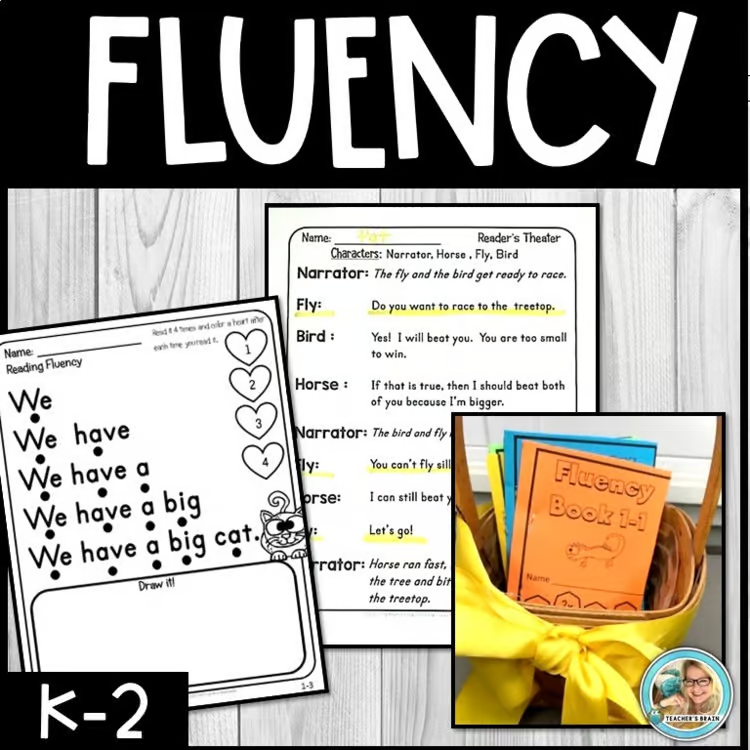
This year-long fluency program includes:
- Daily fluency passages and phrase mini-books to build accuracy and expression
- Reader’s theater scripts for partner or group practice
- Sentence-building activities that encourage fluency with meaning
- Fluency tests and reflection pages to track progress
- Suggested daily lesson plans that take the guesswork out of instruction
Teachers report that this resource works especially well in guided reading groups and interventions, and that students love the reader’s theater components!
Practical Tips to Boost Fluency Every Week
Here are a few simple ways to make fluency practice feel fun and effective (not forced!):
✨ Turn fluency into a game: Try timed readings, fluency races, or expression challenges.
✨ Celebrate growth: Track WPM (words per minute) and accuracy charts with students.
✨ Pair fluency with comprehension: Ask students to retell or illustrate what they read.
✨ Use partners: Peer reading builds confidence and accountability.
With a tool that provides purposeful text and structure PLUS daily routines that make reading fun, you’ll start to see noticeable gains in how your kinders and first graders sound, and what they understand.
Fluency is the foundation that helps early readers become strong, confident, joyful readers. When you intentionally build fluency with engaging texts, repeated practice, and thoughtful tracking, you’re not just helping students read more words, you’re helping them make meaning.
And that’s the kind of progress that changes a child’s reading journey forever. 😊
Looking for reading activities to increase fluency? Check out my post here!