Spring break is meant to be a pause. A reset. A chance for kids to sleep in, play outside, travel, visit family, and just breathe.
But as teachers, we also know something else is true. Extended breaks can lead to learning loss, especially in reading fluency, math fact automaticity, and writing stamina.
So how do you protect student progress without overwhelming families?
The answer is simple. A thoughtful spring break packet that focuses on review, not new instruction.
When done well, spring break packets can support at-home learning in a way that feels manageable for students and realistic for parents.
Rethink the Purpose of a Spring Break Packet
This packet should not feel like a week of new lessons or high-pressure homework. Instead, it should reinforce skills students have already learned so they return to school confident and ready to continue building.
When the goal shifts from assigning work to maintaining progress, everything changes. Students are not being pushed into unfamiliar standards. They are simply practicing skills that keep their academic foundation strong.
That mindset alone helps reduce stress for both students and families.
Focus on Foundational Skills Across Grade Levels
The most effective packets focus on reviewing essential skills.
In PreK and Kindergarten, this often includes letter recognition, phonics, sight words, number recognition, counting, and simple addition concepts. In first and second grade, students benefit from fluency practice, phonics review, addition and subtraction facts, and short writing prompts.
Upper elementary students in third through fifth grade often need reinforcement with multiplication and division fluency, reading comprehension, grammar review, and written responses.
Notice what all of these have in common! They are skills students have already practiced throughout the year. A spring break review packet should strengthen those core skills rather than introduce brand new content.
Keep It Short and Realistic
One of the biggest mistakes teachers make with spring break homework is sending too much.
Families are busy. Kids are excited. Long packets can quickly feel overwhelming and go untouched.
Instead, aim for about fifteen to twenty minutes a day. A short math review page paired with a reading or writing activity is more than enough to maintain skills. When expectations are clear and manageable, families are far more likely to follow through.
Even small amounts of consistent review can significantly reduce learning loss over break.
Build Flexibility Into Your At-Home Learning Plan
Spring break looks different for every family. Some travel. Some work full-time. Some are juggling multiple children with different needs.
Flexibility makes spring break packets more successful. Allow students to complete a set number of pages rather than requiring every single one. Include reading logs or choice activities that can be completed throughout the week. Offer optional challenge pages for students who want more practice.
When families feel supported instead of pressured, participation increases naturally.
Why Spring Break Review Matters
Short breaks may seem harmless, but fluency-based skills can slip quickly without practice. Math facts, reading stamina, and writing confidence are especially vulnerable.
The good news is that structured review packets can prevent most of that regression. Students who practice just a little during spring break tend to transition back into routines faster. They return with stronger confidence and require less reteaching.
That means more instructional time and less review when you come back.
A Simple, Print and Go Solution for PreK Through Fifth Grade
If creating differentiated spring break packets for multiple grade levels feels overwhelming, using a ready-made option can save hours of planning time.
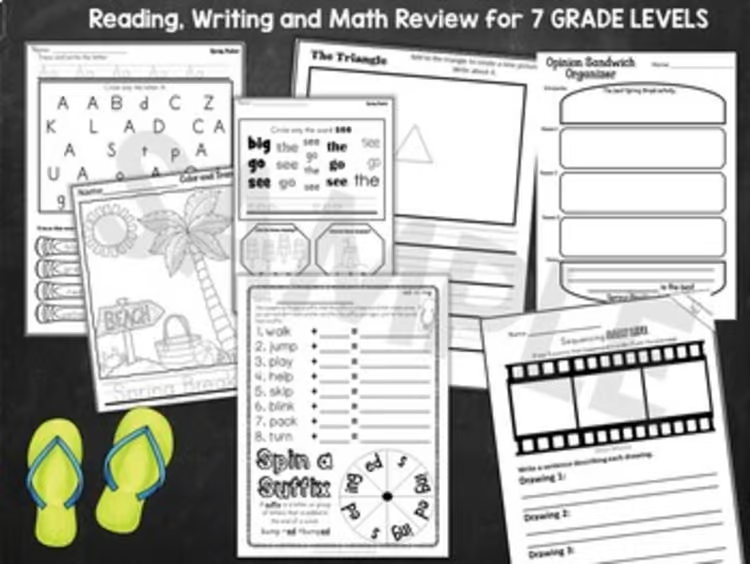
My Spring Break Packets Bundle for PreK through Fifth Grade resource is designed specifically for at-home learning and distance learning support. Each grade level includes skill-based review in reading, math, and writing so students can reinforce important standards without feeling overloaded.
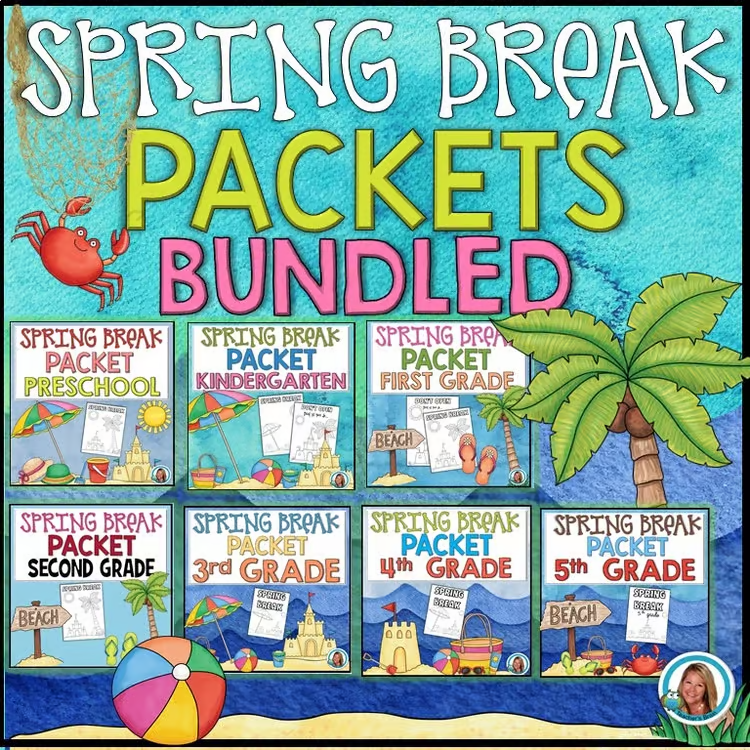
Because the bundle includes PreK, Kindergarten, first grade, second grade, third grade, fourth grade, and fifth grade options, it makes it easy for teams or schools to provide consistent spring break homework across grade levels.
The activities are structured, age-appropriate, and focused on maintaining progress. They are designed to support families while keeping expectations realistic.
Spring break should still feel like a break! But with a thoughtful spring break learning packet, you can protect the progress your students have worked so hard to achieve.
With the right balance of structure and flexibility, spring break can be restful, meaningful, and academically supportive all at the same time.
Looking for only one grade? Check out individual grade level packets here.
For some spring activities, check out my blog post here.