Does Lesson Planning Keep Following You Home?
You sit down to plan one reading lesson, and somehow you’re still at your computer an hour later—with 17 tabs open and your coffee officially classified as iced.
Sound familiar?
During my 20 years in the classroom, I learned that planning didn’t always need more time. Sometimes, I needed a simpler starting point.
Here are five ways to spend less time lesson planning while still choosing meaningful activities for your students.
1. Start With the Skill
Before searching for a cute activity, decide what students need to practice.
Are they working on retelling a story? Writing a complete sentence? Understanding place value?
Knowing the goal helps you narrow your choices. A resource can be adorable, but it still needs to earn its spot in your lesson.
2. Keep Familiar Routines
You don’t need to reinvent your literacy centers or morning work every Monday.
Keep a familiar activity format and change the skill, passage, or topic. Students can spend more time practicing and less time figuring out new directions—and you have fewer things to explain.
Save the big surprises for the occasional classroom visitor. Or the day every glue stick still has a lid.
3. Build a Small Collection of Reliable Resources
Organize activities you’ll use again into folders by subject and skill. Include a few dependable choices for reading, writing, math, and independent practice.
A small collection you can actually find is more useful than hundreds of downloads hiding somewhere in a folder called “New Folder (6).”
4. Choose Resources That Fit Your Classroom
Ready-to-use materials can give you a starting point without requiring you to create every worksheet, organizer, or activity yourself.
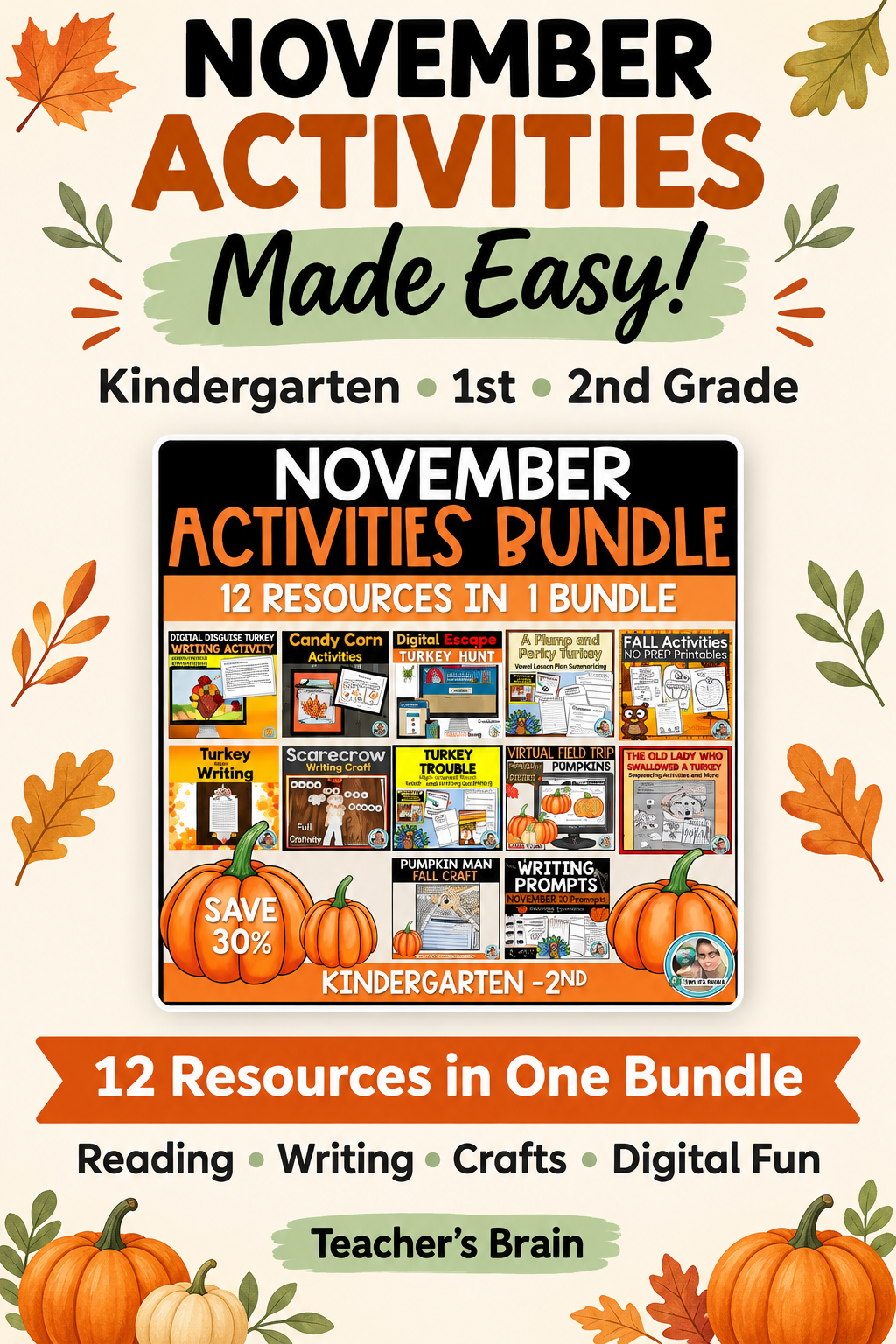
In the Teacher’s Brain shop, you can explore reading activities, writing prompts, math practice, science resources, crafts, and more. Check each product’s grade range, description, and preview to choose what fits your students.
Browse the Teacher’s Brain Shop
5. Leave Yourself a Note for Next Time
After a lesson, jot down what worked, what you changed, and what students needed more help with.
Even a quick note—“Use counters first” or “Split this into two lessons”—can make planning easier the next time you teach that skill.
Future you will appreciate it. Possibly more than another teacher mug.
Start With One Part of Your Day
You don’t have to reorganize your entire teaching life tonight.
Choose the part of your day that takes the most planning. Find one useful resource, establish a routine, and build from there.
If you need a starting point, visit the Teacher’s Brain shop for classroom resources designed to support your lessons.
Find Resources for My Classroom
Happy teaching!
Cindy
Teacher’s Brain 💛