Keeping students focused around a holiday can take a little creativity. You want an activity that feels special while still giving children a reason to read, think, and work together.
After 20 years in primary classrooms, I know how much planning goes into making a special activity run smoothly. Classroom escape rooms are easier to manage when you teach the teamwork routines as carefully as the academic tasks.
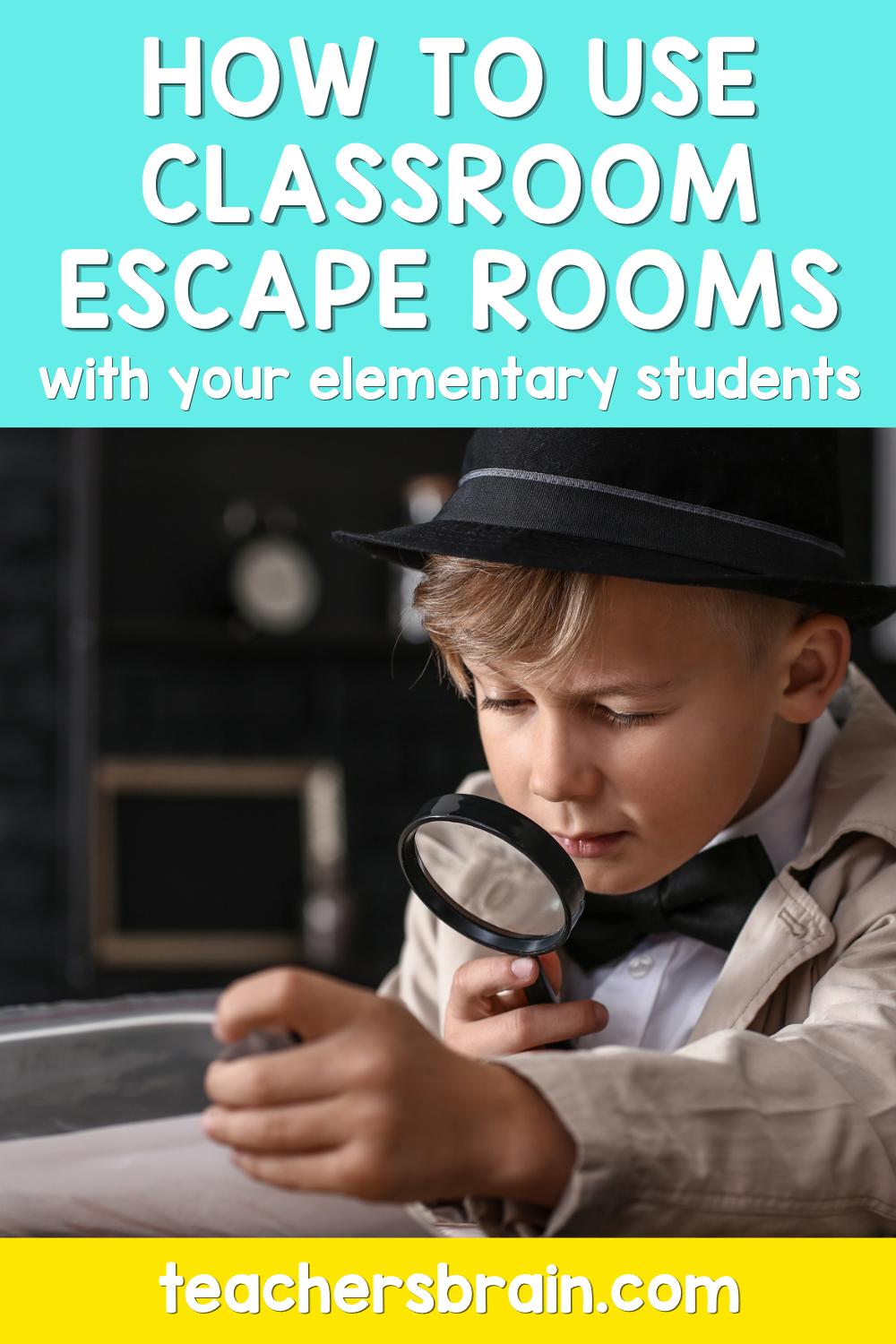
What Are Classroom Escape Rooms?
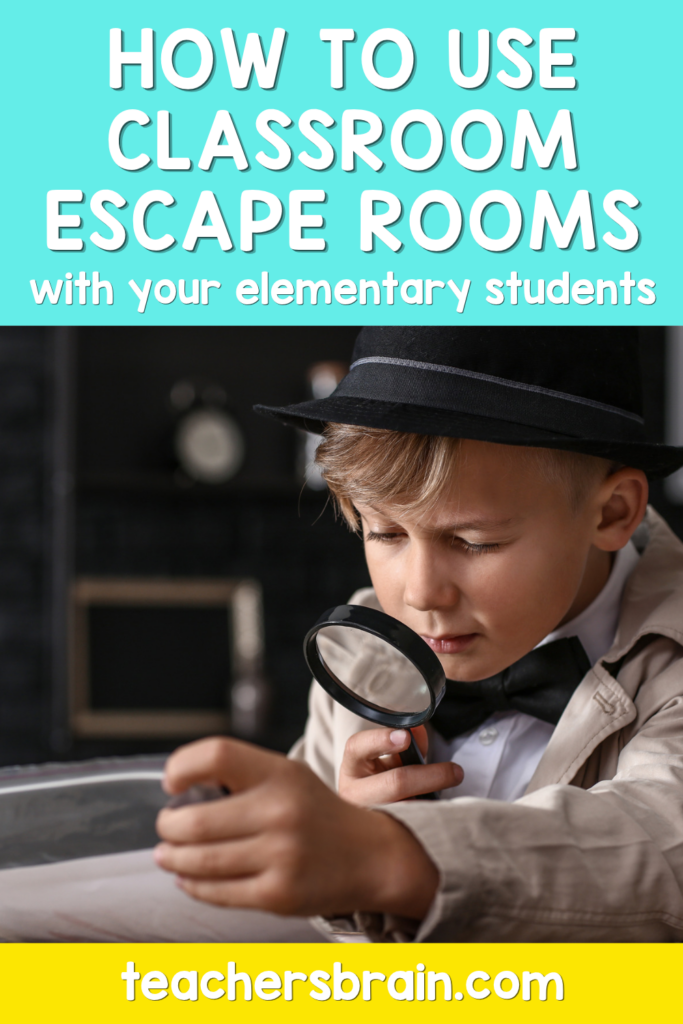
A classroom escape room is a series of connected challenges that students solve to reach a shared goal. A clue might ask them to read information, solve a puzzle, or explain an answer before moving forward.
For young learners, keep the storyline simple and the directions clear. The mystery gives students a purpose, but understanding the task should come before racing to finish.
Choose a Clear Learning Goal
Before choosing decorations or prizes, decide what you want students to practice. Are they answering questions about a text, using vocabulary, or explaining their reasoning?
When planning escape room activities for elementary students, check that the reading demands match the group. You can read directions aloud while still asking students to do the thinking.
Start with skills students have already practiced so they can apply familiar learning in a new situation.
Teach Students How to Work Together
“Work as a team” can mean different things to different children. Model what it looks like to share materials, listen to an idea, and disagree respectfully.
Try assigning jobs such as clue reader, materials manager, and answer checker. Rotate those responsibilities so one confident student doesn’t take over.
Give students useful phrases to practice: “What makes you think that?” and “Let’s check the clue again.” These small supports make cooperative learning activities more manageable.
Prepare the Materials Before Students Begin
Walk through every challenge yourself before introducing it to the class. Check that clues are in order, supplies are accessible, and you understand how each answer leads to the next step.
Keep teacher directions and answers nearby. Decide how students will request help and what they should do while another group receives support.
A timer can add excitement, but adjust the pace to your students. Leave enough time for everyone to participate and explain their ideas.
Make Time to Talk About the Learning
After the final clue, ask students to reflect on how they reached the solution. Which information helped them, and what did they do when an idea didn’t work?
You might also ask, “How did someone on your team help you today?” That conversation helps students recognize the cooperation behind the finished challenge.
A Starting Point for Your Next Classroom Mystery
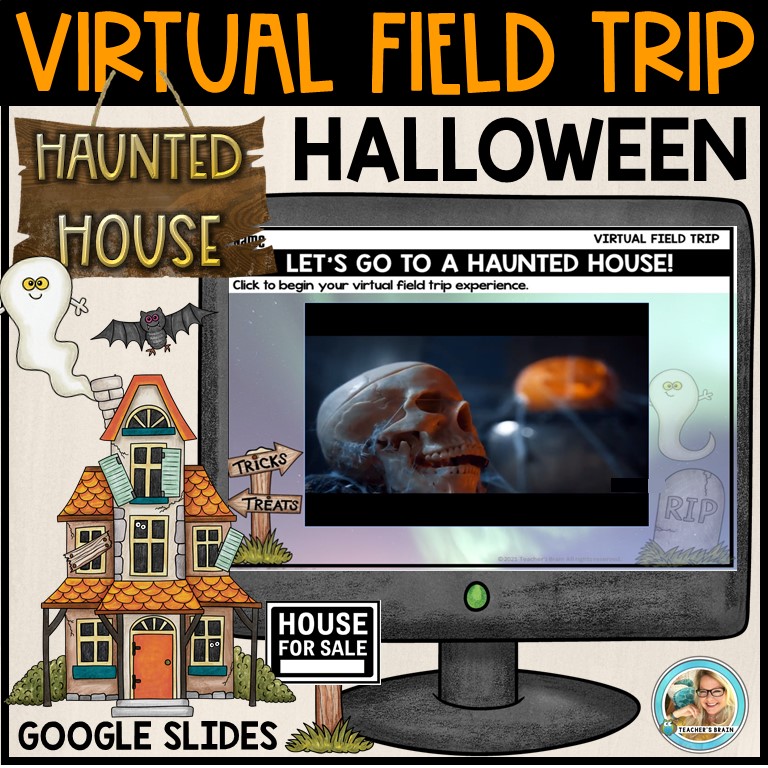
If you’d like to try classroom escape rooms with materials already planned, my Holiday Escape Rooms Bundle includes video hooks and three to four clue challenges per activity.
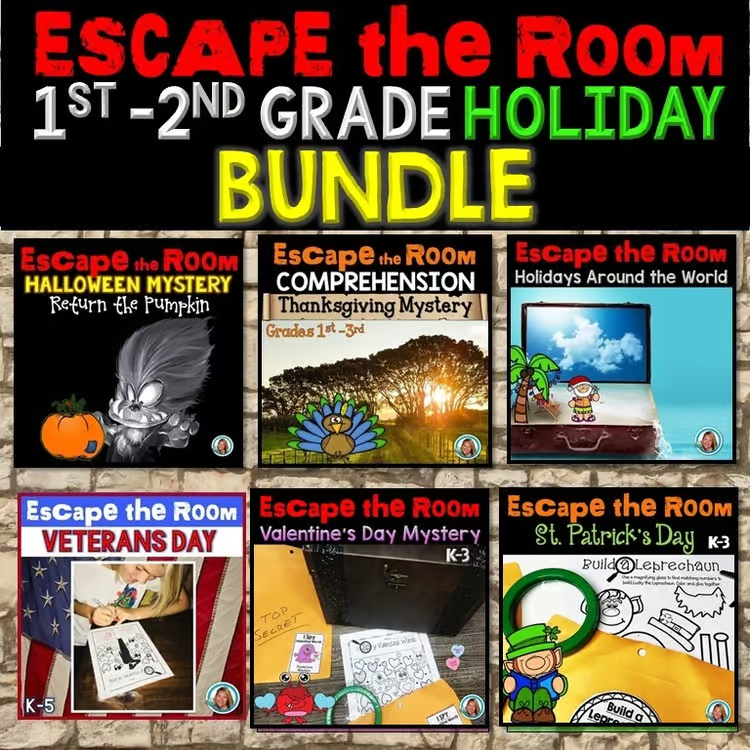
Take a look at the previews and choose a holiday that fits your plans. With the materials prepared and teamwork routines in place, you can focus on helping students think through the mystery together.
Frequently Asked Questions About the Holiday Escape Rooms Bundle
The bundle includes six escape rooms: Halloween, Thanksgiving, Christmas, Veterans Day, Valentine’s Day, and St. Patrick’s Day.
It is recommended for first and second grade teachers. Review the previews to check the fit for your students.
No. The activities use paper keys, and a simple box can hold the final reward. The listing estimates about 40 minutes of preparation and 45–60 minutes for students to complete an activity.